Garden Fencing in Newcastle: What Holds Up Best in a Northern Climate
Fencing is one of those garden elements that most people underestimate until they have to replace it. A fence that looked fine when installed in 2015 can be looking notably tired by 2025 in a Newcastle garden - not because it was poorly installed, but because the north-east climate puts sustained pressure on outdoor timber in a way that milder parts of the country don't experience to the same degree. Newcastle averages around 630mm of rainfall per year, considerably above the national average of about 560mm, and the combination of wet winters, ground-level moisture, and significant temperature variation through winter accelerates the deterioration of untreated or under-maintained timber fencing. Getting the material choice and maintenance approach right from the start avoids a repair bill every five years.

Softwood Timber: The Default Choice and Its Limitations
Pressure-treated softwood - pine or spruce treated with preservative - is the most common fencing material in Newcastle gardens and is what most standard fence panels are made from. Treated correctly and maintained, it lasts 10-15 years. Left untreated after installation, or fitted in a position where the base is in contact with soil or retained moisture, it deteriorates faster.
Blocktech Landscapes Ltd installs fencing as part of landscaping projects across Newcastle, and the most common post failure we see is at the base - fence posts that have been set in concrete but where water has pooled around the post base and never fully drained. Post spurs (metal post supports set in concrete, with the timber post clamped above ground level) eliminate this problem entirely by keeping the timber away from ground contact.
Featherboard vs Fence Panels
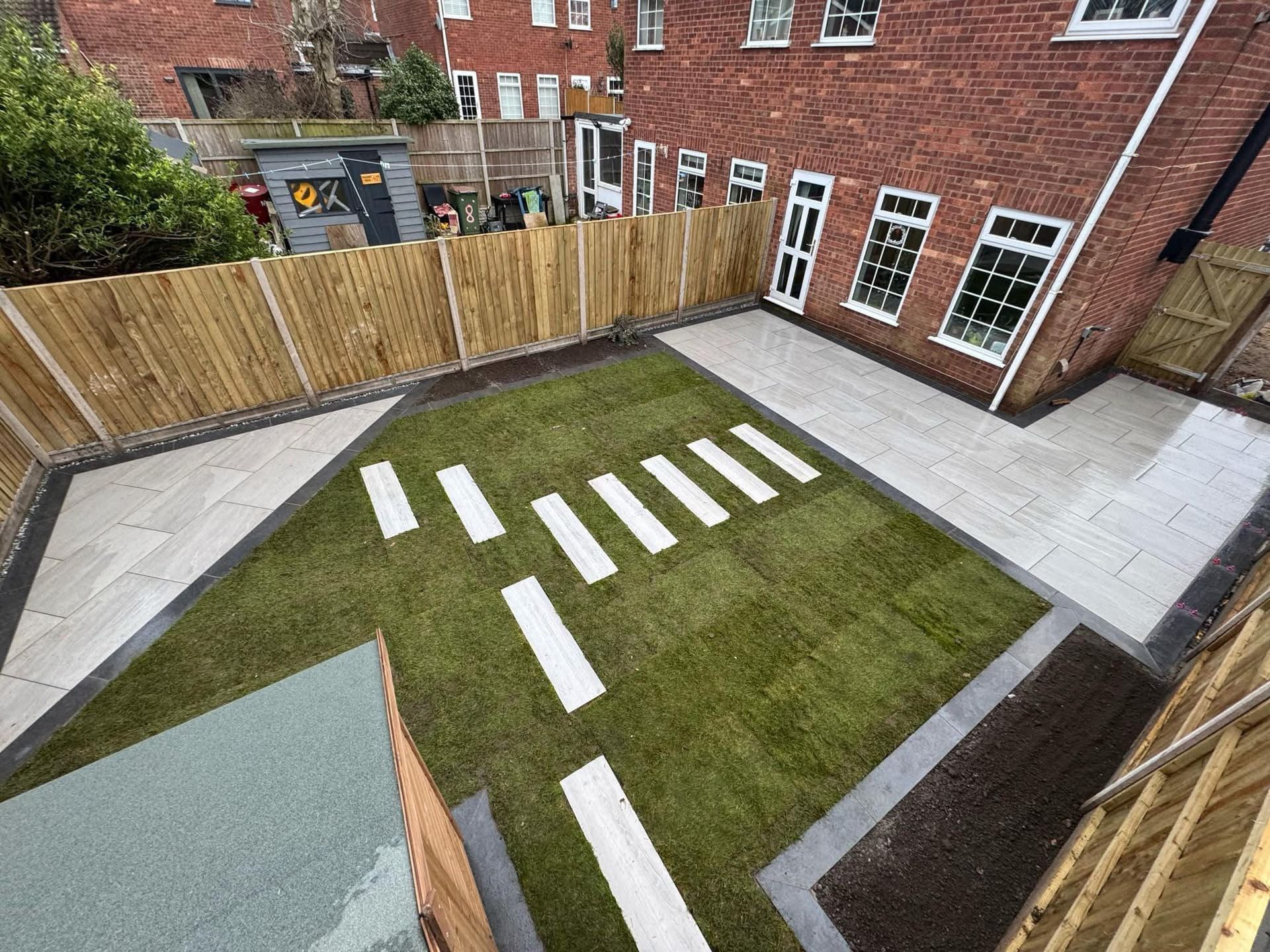
Standard fence panels are convenient but are a fixed size and are weaker at the joins between rails than individually fitted featherboard or close-board fencing. Close-board fencing - where individual boards are nailed to horizontal arris rails fixed to posts - is significantly stronger and more repairable. When a panel fence loses a panel, you replace the whole panel. When a close-board fence loses a board, you replace a single board. For a garden that's likely to take occasional knocks or be exposed to higher winds, close-board is worth the additional installation cost.
Hardwood Alternatives
Oak and sweet chestnut are both naturally durable hardwoods that perform well in northern climates without needing chemical treatment. Oak fencing has a natural lifespan of 20-30 years in contact with soil; sweet chestnut is similar. Both are more expensive than softwood but the longer lifespan narrows the cost-per-year gap considerably. Oak has the additional benefit of being genuinely attractive as it weathers and silvers over time.
The main practical limitation is availability and cost - hardwood fencing timber is less readily available from local suppliers and typically costs 2-3x the equivalent softwood material.
Composite and Metal Options
Composite fencing (a blend of wood fibre and plastic) has improved significantly and is now genuinely low-maintenance in Newcastle's climate. It doesn't rot, doesn't need painting, and the colour holds reasonably well with UV-stable products. The appearance is more uniform and less natural than timber, which suits some garden styles and not others.
We've covered artificial grass for Newcastle gardens elsewhere, and similar principles apply - composite products reduce ongoing maintenance considerably at a higher upfront cost, which is increasingly worth considering in gardens where regular painting and treatment is unlikely to happen consistently.
Metal fencing - wrought iron or steel panel fencing - is durable but expensive and most appropriate for period properties where the style fits.
Post Installation: The Detail That Matters Most
Regardless of the fencing material, post installation is where most fence failures begin. Posts set directly in concrete without adequate drainage around the base, or posts that are undersized for the panel height, account for the majority of premature fence failures in Newcastle gardens. The general rule is that at least a third of the post length should be below ground - for a 6ft (1.8m) panel, a 9ft (2.7m) post buried to 900mm gives adequate stability.
FAQ
Q: How long does garden fencing last in Newcastle?
Pressure-treated softwood typically lasts 10-15 years with reasonable maintenance. Hardwood like oak or sweet chestnut lasts 20-30 years. Composite fencing can last 25 years or more. Post failure through ground contact often causes fence failure earlier than the panel material itself.
Q: Is close-board fencing better than fence panels in Newcastle?
For longevity and repairability, yes. Close-board fencing is stronger, handles wind loads better, and can have individual boards replaced without changing the whole section. Panel fencing is cheaper to install initially but less repairable and weaker at the joins.
Q: Do fence posts need concrete in Newcastle?
Concrete gives posts the best stability and longevity, but the post base needs adequate drainage. Post spurs (metal post supports set in concrete, with the timber above ground level) eliminate ground-contact rot entirely and are worth using where post longevity is a priority.
Q: Does composite fencing look right in a Newcastle garden?
It depends on the garden style. Composite suits contemporary or low-maintenance garden designs well. For a traditional garden or a period property, natural timber tends to look more appropriate. The maintenance saving is significant - no painting or treating every few years.
Ready to work with Blocktech Landscapes Ltd?
Let's connect! We’re here to help.
Send us a message and we’ll be in touch.
Or give us a call today at 07351542487
Agency Contact Form
More Marketing Tips, Tricks & Tools
Blocktech Landscapes Ltd