Patio Design and Materials in Newcastle: What to Choose for a Northern Climate
Newcastle's climate is not particularly forgiving for outdoor spaces. The north-east gets its share of rain, frost, and wind, and a patio material that performs well in a sheltered southern garden can behave quite differently once it's exposed to a full Newcastle winter. Choosing the right surface is less about aesthetics alone and more about understanding how different materials respond to freeze-thaw cycles, prolonged wet weather, and the kind of temperature swings that are routine this far north.
The Freeze-Thaw Problem
The main thing that distinguishes northern patio design from elsewhere in the country is frost. Water gets into the surface of permeable or porous materials, expands when it freezes, and over several winters causes cracking, spalling, and surface breakdown. This rules out or limits certain materials that might otherwise be popular choices.
Natural sandstone, for example, is widely used in garden design but varies enormously in quality. Lower-grade sandstone is quite porous and struggles with repeated freeze-thaw - it can look good initially but starts to flake and pit within five to ten years in a north-east climate. Higher-grade options (often from specific Indian quarries or from Yorkshire stone) are denser and much more resistant, though the cost reflects that. If you want natural stone in Newcastle, the grade matters considerably more than it does in milder climates.
What Actually Holds Up
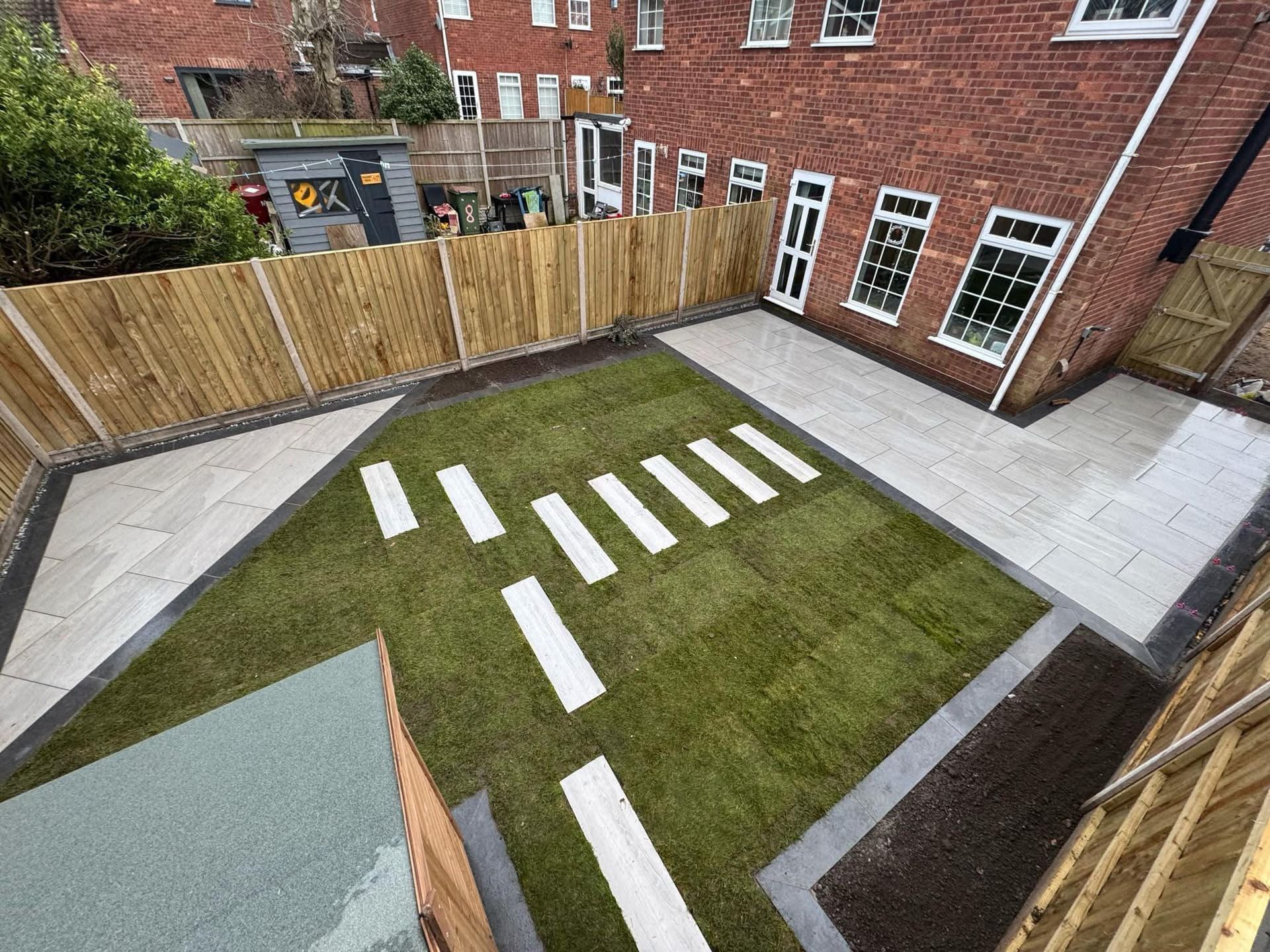
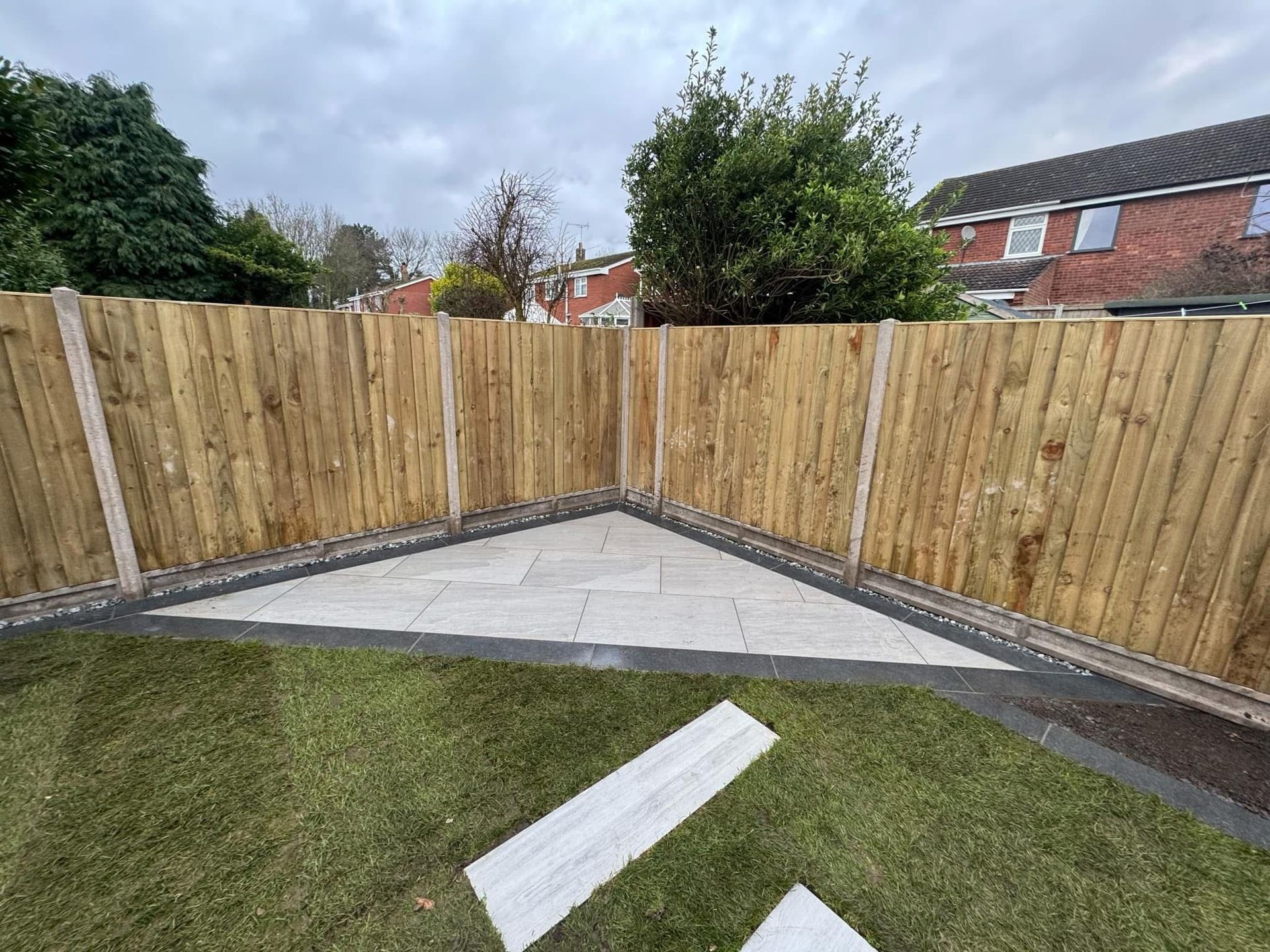
Blocktech Landscapes Ltd regularly specifies porcelain paving for Newcastle gardens, and for good reason. Porcelain has very low water absorption rates - typically less than 0.5% - which means there's almost nothing for frost to work on. It doesn't stain easily, resists algae well in wet conditions, and holds its finish for a long time without sealing. The trade-off is that it's harder to cut accurately (it needs a diamond blade), more expensive than budget natural stone options, and can be slippery when wet if you choose the wrong finish. Matt and textured finishes address the slip issue.
Concrete paving flags are another practical choice that tends to get overlooked. Modern concrete pavers have improved significantly and can be produced in textures and colours that are quite convincing. They're dense, consistent in quality, and frost-resistant when made to the right standard. They're also typically cheaper than porcelain.
Mortar, Drainage, and the Substrate Beneath
We've covered garden lighting planning for Newcastle spaces elsewhere, but the base and drainage underneath the patio matters as much as the surface material. A patio that drains poorly will pool water next to the material and accelerate freeze-thaw damage regardless of what you've chosen. Proper falls - usually around 1:60 gradient away from the house - and a correctly prepared sub-base are non-negotiable in Newcastle's conditions. A material that might last thirty years on a well-built base could be lifting and cracking within five on a badly prepared one.
Thinking About Sun, Shade, and Orientation
Newcastle is further north than most people realise in terms of the sun's angle, particularly from October to March. A patio that faces north or north-east will receive very little direct sunlight in winter and can stay damp for extended periods, which increases algae and moss growth. Orientation doesn't necessarily change your material choice, but it does change the maintenance expectations - a north-facing porcelain patio will need pressure washing more regularly than the same surface facing south.
Layout and Size
A common mistake in patio design is underestimating how much space is actually needed. A 3x3 metre patio sounds reasonable until you put a table and four chairs on it and realise there's no room to pull a chair back without stepping onto the lawn. For a family-sized outdoor dining setup in a Newcastle back garden, 4x4 metres is a more realistic minimum, and most people who've had one built wish they'd gone a bit larger.
FAQ
Q: What patio material holds up best in Newcastle's climate?
Porcelain paving is typically the most frost-resistant option due to its very low water absorption rate. Quality natural stone (denser grades of Indian sandstone or Yorkshire stone) also performs well. Cheaper, more porous sandstone tends to deteriorate faster in a north-east climate.
Q: Does a north-facing patio need a different material in Newcastle?
Not necessarily a different material, but expect more algae and moss growth and plan for more regular cleaning. A textured, matt-finish porcelain with good drainage is a good choice for shaded positions.
Q: How important is the sub-base under a Newcastle patio?
Very. A correctly prepared sub-base with proper drainage falls matters as much as the surface material. Poor drainage accelerates freeze-thaw damage and leads to movement and lifting over time.
Q: What's a good minimum patio size for outdoor dining?
For a family table and four chairs with room to move, 4x4 metres is a realistic minimum. Many people find 3x3 metres is too tight once furniture is in place.
Ready to work with Blocktech Landscapes Ltd?
Let's connect! We’re here to help.
Send us a message and we’ll be in touch.
Or give us a call today at 07351542487
Agency Contact Form
More Marketing Tips, Tricks & Tools
Blocktech Landscapes Ltd